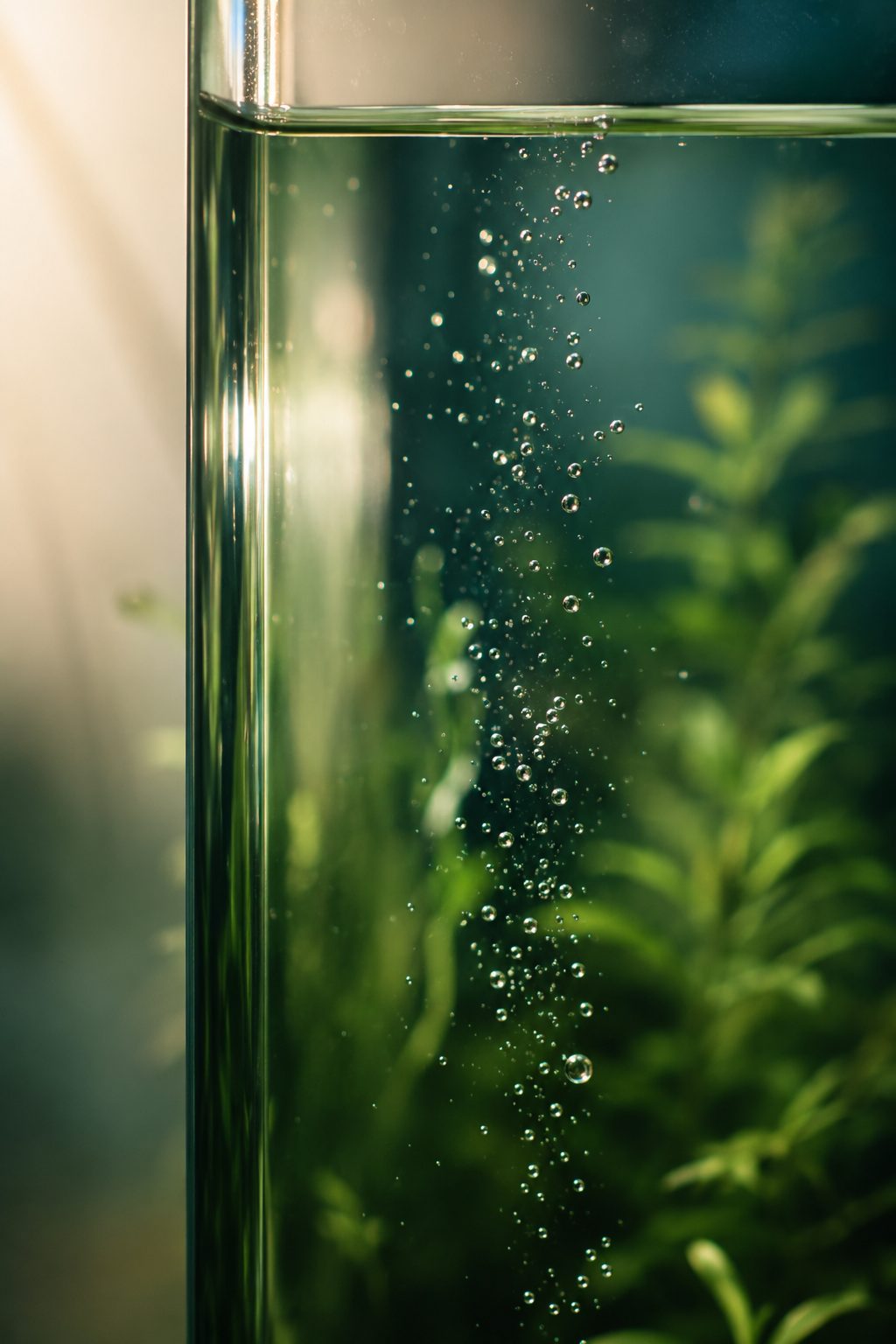
Water Chemistry & the Nitrogen Cycle
The biology does the filtration. Ammonia becomes nitrite becomes nitrate that plants eat, and the whole loop runs on bacteria you cannot see. These are the guides to the nitrogen cycle, pH, hardness, and reading a test kit.
All 8 guides
Ammonia in a Fish Tank: Where It Comes From and How to Drop It
Ammonia is the first poison every tank produces, and 0.25 ppm is enough to burn a fish's gills. In a cycled tank you never see it. When a test shows it, the tank cannot keep up.
Aquarium Tannins and Blackwater: What They Do
Tea-colored aquarium water is not dirty water. Tannins leach from driftwood and leaves, tint the tank amber, lower pH a few tenths, and suit the soft-water fish that evolved in them.
Beneficial Bacteria: The Invisible Filter
The filter is a box of surfaces. The bacteria growing on those surfaces are the part that actually processes waste, and they take about a month to build.
Fishless Cycling: The Humane Way to Start a Tank
Fish-in cycling asks an animal to live in rising ammonia for a month. A fishless cycle reaches the same finished tank with a bottle of ammonia and nothing alive to poison.
GH and KH Explained: The Hardness Numbers That Matter
Two tanks at the same pH of 7.0 can be right for completely different animals, because pH hides the two numbers that decide it. GH and KH are those numbers.
How to Cycle a Fish Tank (Before Any Fish Go In)
A new tank of clear water is one of the most dangerous places you can put a fish. Cycling builds the bacteria first, so the water is ready before anything lives in it.
The Aquarium Nitrogen Cycle, Explained Simply
Fish waste becomes ammonia, ammonia becomes nitrite, nitrite becomes nitrate. Two colonies of bacteria run the whole conversion, and it takes about a month to build.
What Is pH in an Aquarium, and Does It Matter?
Most fish care less about the exact pH number than whether it holds still. A stable 7.8 beats a 7.0 that drifts half a point a day.
From the compatibility database
Parameters pulled live from the compatibility database.
- read the nitrogen cycle and parameters
- tool · $$
- measure hardness for stocking and shrimp
- tool · $
- neutralize chlorine and chloramine in tap water
- consumable · $
- Light: low · beginner
- Temp 59 to 86 F · pH 6 to 7.5
- Hardness 5 to 15 dGH · CO2 none
- gentle biological filtration and cycling surface
- filtration · $
One build breakdown a week.
A stocked, balanced setup pulled apart: the plants, the cleanup crew, the parameters, and where it would go wrong. Free.
No spam. Unsubscribe anytime.